




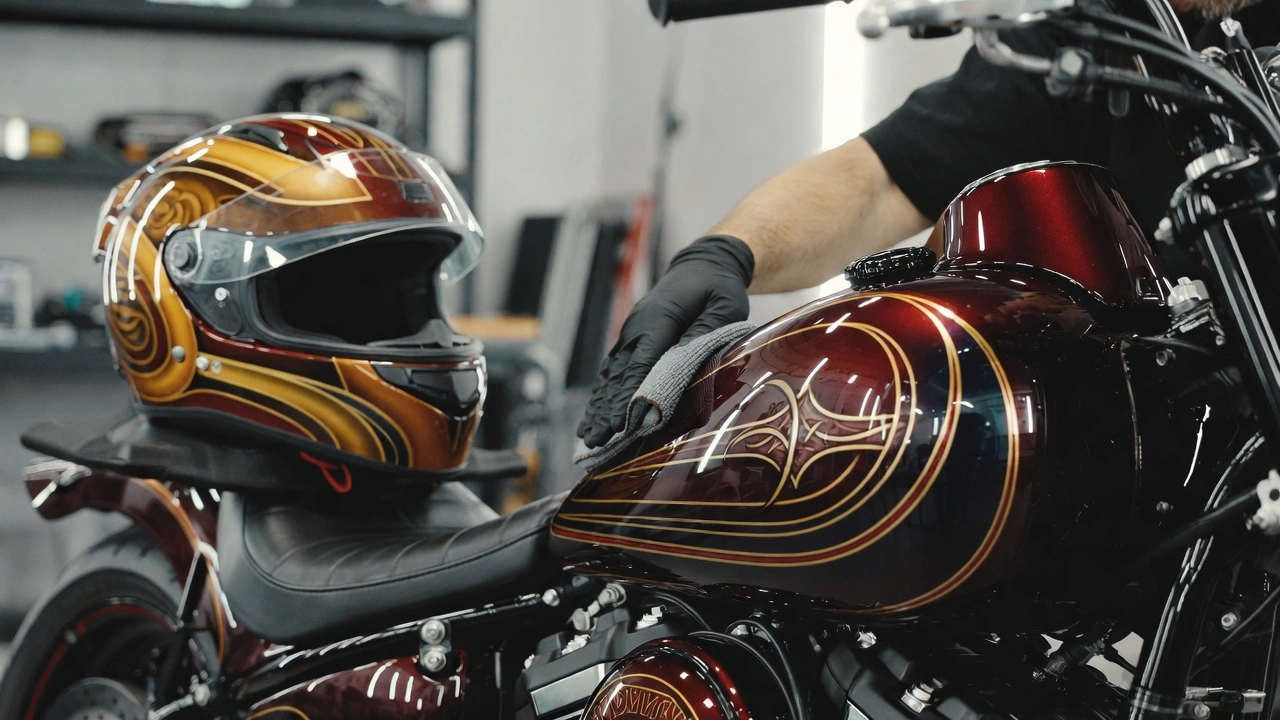
How to Maintain Custom Paint and Helmet Artwork
You’ve invested ₹65,000–1,50,000 in a stunning Devil’s Customs paint transformation—candy layers glowing from within, hand-painted pinstripes flowing like calligraphy, airbrushed murals telling your story. Or perhaps you’ve commissioned custom helmet artwork turning protective gear into wearable art.
Now comes the critical question: How do you preserve this masterpiece against India’s brutal sun, monsoon rains, road grime, and daily riding abuse?
The harsh reality: Custom paint demands different care than factory finishes. Those 8–15 meticulous layers creating three-dimensional depth can last 10–12 years or deteriorate within 2–3 years—the difference lies entirely in maintenance discipline.
Why Custom Paint Requires Special Care
The Vulnerability of Perfection
Factory paint tolerates neglect. Thin layers (70–95 microns) are designed to last 5–7 years with minimal care.
Custom paint—especially Devil’s Blood candy finishes—operates differently. With 180–250 micron depth and translucent candy layers over reflective metallics, any surface damage becomes highly visible.
Scratches revealing the metallic base destroy the candy glow permanently.
Hand-painted elements like pinstripes, gold leaf, and airbrushed murals sit inside clear coat layers. Once damaged, they cannot be spot-fixed—entire panel repaint is required.
Environmental Threats in Indian Conditions
Summer UV (April–June): 45–48°C heat accelerates clear coat oxidation.
Monsoon rain: Acidic water etches clear coat.
Winter fog: Moisture traps pollutants.
Pollution: Dust acts like sandpaper if wiped improperly.
Road hazards: Stone chips, bird droppings, fuel spills attack paint chemistry.
The Essential Do’s: Maintenance Best Practices
DO #1: Wash Correctly and Frequently
Frequency: Minimum twice weekly. During monsoon or dusty season, wash after every ride.
Step 1: Pre-Rinse
- Use room-temperature soft water
- Low-pressure rinse only
- Remove loose debris before touching paint
Step 2: Two-Bucket Method
Bucket 1:
- pH-neutral motorcycle shampoo
- No dish soap
Bucket 2:
- Clean rinse water
- Prevents cross-contamination
Application
- Use premium microfiber wash mitt
- Top-to-bottom motion
- Straight-line wiping only
- Rinse mitt after each panel
Step 3: Rinse Thoroughly
- Remove all soap residue
- Check hidden areas
Step 4: Dry Immediately
- Use dedicated microfiber drying towels
- Blot — do not drag
- Never air dry
DO #2: Apply Paint Protection Regularly
Tier 1: Paint Sealant (Every 3–6 Months)
- Synthetic polymer barrier
- Thin layer application
- Buff after hazing
Tier 2: Carnauba Wax (Monthly)
- Adds depth to candy paint
- Apply thin coat
- Buff after 10–15 minutes
Tier 3: Quick Detailer (After Rides)
- Removes dust
- Enhances shine
- 2-minute maintenance
DO #3: Apply Ceramic Coating for Ultimate Protection
Ceramic coating is semi-permanent nanotechnology that bonds with the clear coat, creating a 9H hardness protective barrier lasting 2–5 years.
Benefits
- UV protection preventing oxidation and fading
- Hydrophobic surface (water beads off instantly)
- Chemical resistance against acid rain and bird droppings
- Reduced swirl marks
- Enhanced gloss for deeper candy appearance
Professional Application Process
- Paint correction
- Panel prep (IPA wipe)
- Thin ceramic layer application
- Leveling and buffing
- 24–48 hour curing
Investment: ₹25,000–45,000
Lifespan: 3–5 years
DO #4: Protect Against Stone Chips
Paint Protection Film (PPF)
- Self-healing polyurethane film
- Applied to high-impact areas (tank sides, fenders, fairings)
- Absorbs stone impacts
- Invisible when installed professionally
- Cost: ₹15,000–70,000 depending on coverage
Additional Protection
- Tank pads & frame guards
- Maintain safe following distance
- Avoid gravel-heavy construction zones
- Prefer indoor or shaded parking
DO #5: Address Damage Immediately
Stone Chip
- Repair within 24 hours
- Clean with isopropyl alcohol
- Apply matching base + candy + clear coat
Clear Coat Scratch
- Light scratch → Compound polish
- Deep scratch → Professional correction
Bird Droppings / Tree Sap
- Remove within 2–4 hours
- Never wipe dry
- Soften with water or detail spray first
DO #6: Maintain Custom Helmet Artwork
Custom-painted helmets require the same care protocol as bike paint.
After Every Ride
- Clean visor with dedicated cleaner
- Use detail spray on painted surface
- Remove bug splatter immediately
Monthly Care
- Wash with pH-neutral shampoo
- Hand wash only
- Apply sealant or ceramic coating
Storage
- Use breathable helmet bag
- Avoid extreme heat
- Never leave in direct sunlight
The Critical Don’ts: Avoiding Damage
DON’T #1: Use Automatic Wash Systems
- High pressure damages decals
- Rotating brushes create swirl marks
- Harsh chemicals strip protection
- Unfiltered air causes micro-scratches
DON’T #2: Apply Wax to Matte Finishes
- Wax creates glossy patches
- Ruins matte texture permanently
- Use matte-specific sealants only
DON’T #3: Use Household Cleaners
- No glass cleaner (ammonia damage)
- No dish soap (strips wax)
- No strong solvents (dissolves candy layers)
DON’T #4: Scrub Dry or Use Wrong Tools
- No paper towels
- No old cotton rags
- No sponges
- Always lubricate before wiping
DON’T #5: Park in Direct Sunlight
- UV causes oxidation and yellowing
- Prefer indoor parking
- Use breathable bike cover if outdoor
DON’T #6: Ignore Water Spots
- Hard water minerals etch clear coat
- Dry immediately after wash or rain
- Use vinegar method for fresh spots
The ROI of Proper Maintenance
Scenario A: Proper Care
- Maintenance + detailing over 10 years: ₹2,05,000
- Resale premium: ₹30,000–50,000
- Better long-term value
Scenario B: Neglect
- Respray cost mid-ownership
- Lower resale value
- Higher long-term expense
Conclusion: Prevention is significantly cheaper than restoration.
Conclusion: Protecting Your Rolling Masterpiece
Your Devil’s Customs transformation represents personal expression and craftsmanship. Proper care ensures your candy finish and custom artwork retain their brilliance for a decade or more.
Maintenance Formula
- Weekly washing
- Monthly wax
- Quarterly sealant check
- Annual professional detailing
Your Next Steps
- Buy proper microfiber & pH-neutral shampoo
- Establish regular washing routine
- Consider ceramic coating
- Schedule annual professional detailing
Ride protected. Ride brilliant.