




Top 10 Royal Enfield Maintenance Tips Every Rider Should Know (2026 Guide)
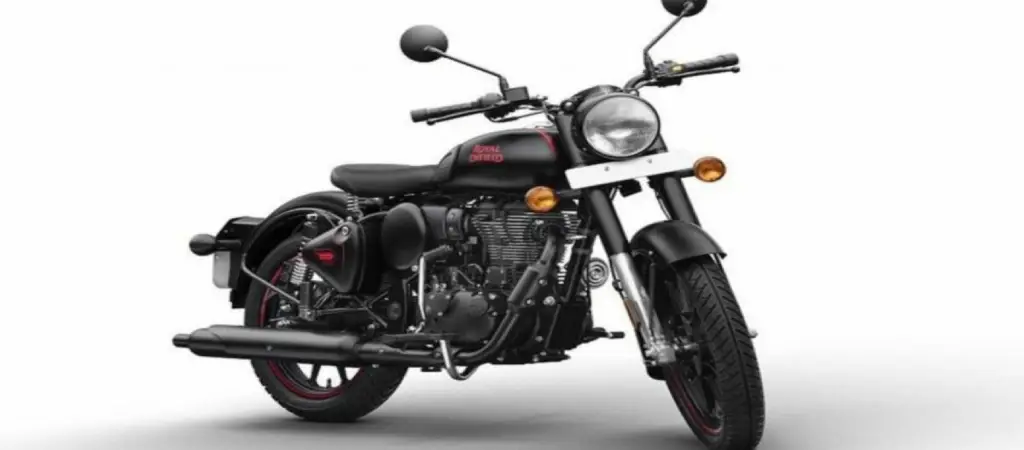
Owning a Royal Enfield is an emotion. Whether you are navigating city traffic on a Hunter 350, cruising the highways on a Classic 350, or pushing the limits on an Interceptor 650, that signature mechanical thump commands respect. But maintaining a heavy metal machine requires more than just regular washing.
Riders often struggle with engine overheating, chain noise, and rusting bodywork. At Devil’s Customs, our Noida-based workshop has serviced, restored, and customized over 1,000+ Royal Enfields. We get our hands dirty every single day.
In this comprehensive 2026 guide, we are sharing our real-world Royal Enfield maintenance tips, a transparent cost breakdown, long-ride preparation advice, and a free downloadable touring checklist. Let’s keep your machine running perfectly for decades to come.
🛠️ The Top 10 Royal Enfield Maintenance Tips
Follow this expert-approved motorcycle maintenance checklist to enhance your bike’s lifespan, mileage, and reliability.
1. Engine Oil & Fixing Overheating Issues
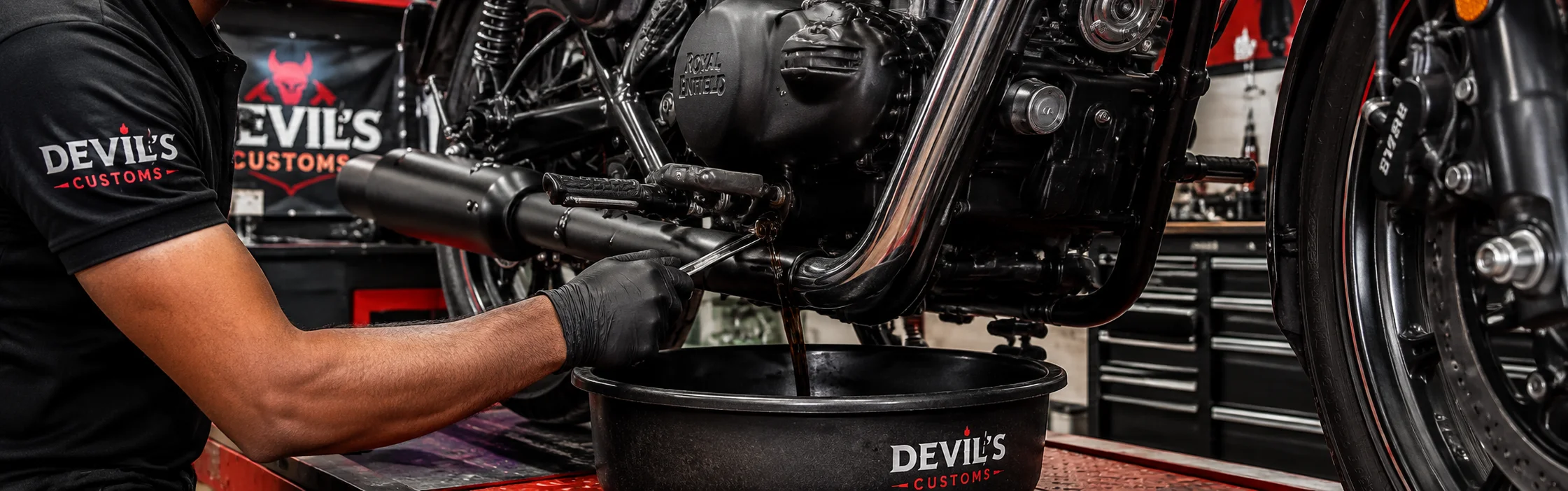
The J-series engines and 650 twins are incredibly refined, but they rely heavily on oil cooling. If you face severe engine heating issues in city traffic, degraded engine oil is usually the culprit.
- Action: Check the oil inspection window weekly. The oil should be golden/amber. If it looks like dark sludge, change it immediately.
- Pro Tip: Always use the manufacturer-recommended fully synthetic oil (like 15W-50) and replace the oil filter during every change.
2. Rust Prevention & Exterior Tank Protection
Royal Enfields feature gorgeous heavy metal bodywork, making them highly susceptible to rust during the monsoon and paint fading during intense summers. A single scratch from your riding jacket zipper can expose the bare metal to moisture.
- The Ultimate Solution: Prevention is better than repainting. We highly recommend installing a 100% waterproof tank cover from day one.
- Why it works: These heavy-duty covers shield your original paint from rain, dust, and UV rays while adding a muscular volume to the bike.
3. Chain Maintenance & Eliminating Chain Noise
A loose or dry chain is the number one reason for poor mileage, jerky acceleration, and that irritating chain noise when you roll off the throttle.
- Action: Clean and lubricate your chain every 500 km. Use a grunge brush and a dedicated chain cleaner to remove muck.
- Pro Tip: Always spray the chain lube on the inside of the lower chain rung so the centrifugal force pushes the lubricant into the O-rings.
4. Tire Pressure & Mileage Improvement Tips
Wondering why your Royal Enfield mileage has suddenly dropped? Under-inflated tires increase rolling resistance, forcing the engine to burn more fuel to maintain speed.
- Action: Check your tire pressure weekly. Keep the front at 32 PSI and the rear at 34 PSI (or as per your specific model’s manual). Maintaining optimal pressure is the easiest mileage improvement tip you can follow.
5. Battery Drain Fixes & Electrical Health
If your bike refuses to start after sitting idle for a week, you might have a parasitic battery drain or corroded terminals.
- Action: Check the battery terminals for white, acidic buildup. Clean them with a wire brush, tighten the screws, and apply a dab of petroleum jelly. If you have installed aftermarket auxiliary lights, ensure the wiring is secured with proper relays to prevent battery drain.
6. Brake Fluid and Pad Inspection
Stopping a 195+ kg motorcycle safely requires your braking system to be flawless.
- Action: Inspect the brake fluid window on your master cylinder; the fluid should be completely clear. Visually inspect the brake pads—if the friction material is thinner than 2mm, replace them before they score your brake rotors.
7. Lubricate Cables to Fix a Hard Clutch
A stiff clutch lever will ruin your riding experience, causing severe wrist pain during heavy traffic commutes.
- Action: Disconnect the clutch cable from the lever every 3,000 km and apply a few drops of light machine oil or a dedicated cable lube down the housing. This simple step ensures butter-smooth gear shifts.
8. Custom Paint & Bodywork Care
Washing your motorcycle with cheap dish soap strips away the clear coat’s protective layer.
- Genuine Advice: Use a pH-neutral automotive shampoo and a microfiber cloth. If you have invested in professional paint jobs or custom finishes like the Devil’s Blood Paint collection, apply a layer of Carnauba wax every month. (Note: Never use wax on matte finishes!)
9. Riding Gear Maintenance
Maintaining your motorcycle is useless if your safety gear is compromised. Wash your helmet’s inner liners every month to prevent bacterial buildup, and keep your visor scratch-free for night riding.
- Looking for an upgrade? Explore our exclusive range of DOT-certified custom motorcycle helmets that pair unmatched safety with aggressive street styling.
10. Long Ride Preparation & Touring Setup
Taking your Royal Enfield to the mountains? Do not leave without inspecting the T-CLOCS: Tires, Controls, Lights, Oil, Chassis, and Stands.
- Ensure your suspension is adjusted for the extra luggage weight. If you want to ride comfortably, consider upgrading your stock seat and adding robust touring kits and accessories.
⚠️ Common Royal Enfield Problems & Solutions
Even the most robust machines face minor hiccups. Here is how to diagnose and fix them:
- Rusting Fuel Tank: Extremely common in coastal or high-rainfall areas. Solution: Use a premium waterproof tank cover and park under a breathable bike cover.
- Loose Chain Noise: Caused by chain slack. Solution: Get your chain tension adjusted by a mechanic every 2,000 km.
- Hard Clutch: Caused by dry or frayed cables. Solution: Route the cable correctly and lubricate it generously.
- Vibration Issues (Buzzing Mirrors): The signature thump can sometimes vibrate the handlebars excessively. Solution: Install heavier aftermarket bar-end weights and check engine mounting bolt torque.
📥 Free Download: Royal Enfield Touring Checklist PDF
Planning a long ride? Don’t leave anything to chance. We have compiled a comprehensive toolkit and preparation checklist used by our veteran riders.
Checklist Sneak Peek:
- Spare clutch and accelerator cables
- Chain lube and cleaning brush
- Portable tire inflator and puncture kit
- Extra fuses and spark plugs
- Basic toolkit (Spanners, Allen keys, screwdrivers)
🏆 Real Workshop Experience: Why Trust Devil’s Customs?
At Devil’s Customs, we are more than an e-commerce store—we are hardcore riders and expert builders.
Our Noida workshop handles everything from minor servicing to full-scale aesthetic transformations. Whether you are looking for specific Hunter 350 accessories, aggressive Interceptor 650 upgrades, or just honest maintenance advice, we build products that solve real problems.
Our custom parts are rigorously road-tested in the harshest Indian conditions to ensure your motorcycle stays protected and looks incredible.
Frequently Asked Questions (FAQs)
- How can I improve my Royal Enfield’s mileage? The best way to improve mileage is by maintaining correct tire pressure (32 PSI front, 34 PSI rear), cleaning and lubricating your drive chain every 500 km, and replacing a clogged air filter.
- Are custom tank covers actually waterproof? Yes. Premium tank covers designed by Devil’s Customs use a specific blend of heavy-duty leather-finish material and durable cloth to ensure 100% waterproofing, protecting the original metal from rusting.
- Why is my Royal Enfield engine overheating? Air-oil cooled engines get hot in heavy stop-and-go traffic. However, severe overheating is usually caused by degraded engine oil or low oil levels. Always check your oil inspection window and use fully synthetic 15W-50 oil.
- How often should I change my Royal Enfield’s engine oil? For modern J-Series (Classic, Hunter, Meteor) and 650 Twins, it is highly recommended to change the fully synthetic engine oil and the oil filter every 4,000 to 5,000 km.
- How do I stop my motorcycle chain from making noise? Chain noise is caused by a lack of lubrication or loose chain tension. Clean the chain with a grunge brush, apply high-quality chain lube, and ensure the chain slack is adjusted to the manufacturer’s spec (usually 25-30mm play).