



Why Factory Paint Can Never Match Handcrafted Custom Paint
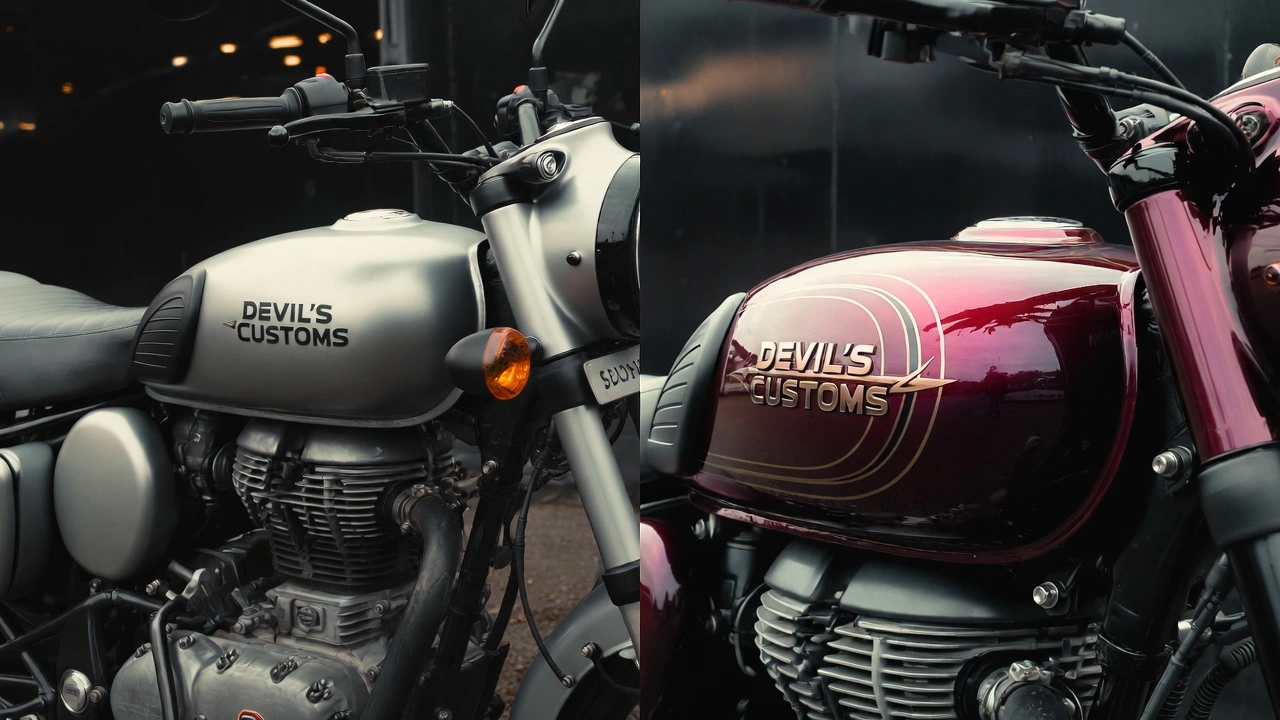
When you purchase a Royal Enfield Classic 350, Jawa Perak, or Interceptor 650 from showrooms, you receive a bike wearing factory paint—efficient, consistent, budget-conscious. But place that stock machine beside a Devil’s Customs creation featuring Devil’s Blood candy finishes, and the difference stuns: one is transportation, the other is rolling sculpture. The gap between factory and handcrafted custom paint isn’t incremental—it’s an entirely different dimension of artistry, depth, and soul that robotic automation fundamentally cannot achieve.
This comprehensive exploration reveals why handcrafted custom paint represents the pinnacle of motorcycle aesthetics, examining the layering alchemy, candy coat magic, detailing obsession, and uniqueness factor separating mass production from masterworks.
The Fundamental Difference: Mass Production vs. Artisan Creation
Factory Paint Philosophy: Speed and Uniformity
The factory approach prioritizes cost efficiency and consistency across thousands of units. Paint application occurs in massive automated facilities where bikes move through stations on conveyor belts—body-in-white preparation, electrodeposition coating, robotic spray application, oven curing—all optimized for speed. Each Royal Enfield receives identical treatment: same primer thickness, same base coat layers, same clear coat application, same baking cycle.
The process delivers acceptable quality at minimal cost: factory paint on a Classic 350 represents approximately ₹8,000-12,000 of the bike’s manufacturing expense. Robots ensure uniform coverage, but they’re programmed for “good enough”—meeting minimum durability standards while maintaining profit margins.
Factory limitations:
- Single-stage or basic two-stage systems: Primer, color, clear—minimal complexity
- Solid or simple metallic colors: No depth, no translucency, no character
- Time constraints: 20-40 minutes total paint application per bike
- Zero customization: Every bike in that color looks identical
- Quality variance: Acceptable orange peel, dust nibs, inconsistent thickness
Handcrafted Custom Paint Philosophy: Art Without Compromise
Devil’s Customs approach inverts factory priorities: quality supersedes speed, uniqueness trumps uniformity, artistry overrides cost. Each bike becomes an individual project receiving 30-60 hours of meticulous attention—surface perfection, multiple layer builds, hand-applied graphics, wet-sanding between stages, final polishing to mirror clarity.[1]
The investment reflects this: comprehensive Devil’s Blood custom paint ranges ₹65,000-1,50,000—but delivers showroom-stopping results impossible through automation. You’re not buying paint application; you’re commissioning wearable art that transforms your motorcycle into signature piece announcing your identity before you arrive.
Custom advantages:
- Multi-stage layering systems: 8-15+ individual layers building depth
- Candy translucent technology: Colors that glow from within
- Unlimited customization: Your vision, your colors, your story
- Obsessive quality control: Every surface perfected before next layer
- Artistic detailing: Hand-painted pinstripes, airbrushed murals, gold leaf accents
The Science of Layering: Building Depth Impossible for Factories
Factory Layering: The Bare Minimum
Standard factory systems use three layers:
Layer 1: Electrodeposition Primer (10-15 microns)
- Applied via submersion in electrically charged paint bath
- Provides rust resistance and base adhesion
- Uniform but minimal thickness
Layer 2: Base Color Coat (20-30 microns)
- Single application of solid color or simple metallic
- Contains pigments providing the bike’s hue
- No depth, no translucency—what you see is opaque paint
Layer 3: Clear Coat (40-50 microns)
- Protective transparent layer resisting UV and scratches
- Single or double pass application
- Functional protection, minimal aesthetic contribution
Total thickness: 70-95 microns across three stages—thin enough that chips expose primer quickly. The color has zero depth—it’s flat, one-dimensional, lifeless compared to custom alternatives.
Devil’s Blood Layering: The Depth Architecture
Devil’s Customs candy paint systems use 8-15 individual layers creating optical depth rivaling jewelry:
Foundation Stage (Layers 1-3):
Layer 1: Metal Preparation
- Sandblasting to bare metal removing factory paint entirely
- Eliminates orange peel, inconsistencies, contamination
- Creates perfectly smooth foundation
Layer 2: High-Build Epoxy Primer (30-40 microns)
- Superior adhesion and corrosion resistance vs. factory primer
- Fills micro-imperfections in metal
- Wet-sanded to absolute flatness (600-grit)
Layer 3: Surfacer/Sealer (20-25 microns)
- Gray or colored sealer matching final hue
- Prevents primer show-through
- Creates uniform base for reflective layers
Reflective Stage (Layers 4-6):
Layer 4: Metallic or Pearl Base Coat (15-20 microns)
- Silver, gold, or pearl white containing reflective particles
- This layer bounces light back through translucent candy layers above
- The critical foundation determining candy brilliance—factories never include this
Layers 5-6: Additional Base Refinement
- Multiple passes building uniform metallic coverage
- Ensures zero mottling or striping
- Wet-sanded (800-1000 grit) for glass-smooth surface
Candy Stage (Layers 7-11):
Layers 7-11: Translucent Candy Color (5-8 microns each, 25-40 microns total)
- This is the magic: transparent tinted layers allowing light to penetrate to reflective base and bounce back
- Each pass darkens and enriches color without becoming opaque
- Devil’s Blood formula: Proprietary candy concentrates mixed with intercoat clear
- Applied in thin, even coats preventing blotchiness—requires master-level spray technique
The candy effect creates three-dimensional color: light enters translucent layers, hits reflective base, bounces back through candy carrying enriched hue. Different angles show different depth—what factories call “color shift” but can’t actually produce.
Protection Stage (Layers 12-15):
Layers 12-14: High-Solids 2K Clear Coat (60-80 microns)
- Three to four thick clear layers factory’s single or double pass
- Each layer wet-sanded (1500-2000 grit) removing dust nibs, orange peel
- Builds clear depth amplifying candy glow below
Layer 15: Final Polish
- Wet-sand with 2500-3000 grit until perfectly flat
- Compound polish removing sanding marks
- Final polish to mirror clarity—reflections sharp enough to read text
Total thickness: 180-250 microns—2-3x factory paint providing durability and optical depth. The finish resembles liquid glass flowing over candy embers glowing from within.
Why Factories Can’t Do This
Time constraints: This process requires 30-60 hours per bike including drying between stages. Factories allocate 20-40 minutes total—physically impossible to achieve depth.
Cost prohibitions: Materials alone cost ₹15,000-30,000; labor adds ₹50,000-1,20,000. Factories budget ₹8,000-12,000 total.
Skill requirements: Candy application demands master-level spray technique—uneven pressure creates permanent striping. Robots lack adaptability; humans bring judgment correcting real-time issues.
Equipment limitations: Factory spray guns optimize coverage speed; custom shops use precision HVLP (High Volume Low Pressure) guns delivering atomized perfection at 10 PSI.
The Candy Coat Phenomenon: Color That Lives
What Makes Candy Special
Candy paint refers to translucent tinted coatings applied over reflective bases—named for resemblance to colored glass candy. Unlike solid paints where pigments sit on surface, candy allows light penetration creating luminous depth impossible otherwise.
The candy structure:
- Reflective base (silver, gold, pearl): Mirrors light back
- Translucent candy layers (2-5 coats): Tint the reflected light
- Clear coat protection (3-4 thick coats): Magnifies and protects
When sunlight hits candy paint:
- Light penetrates translucent candy layers
- Reaches reflective metallic base
- Bounces back through candy picking up enriched hue
- Exits through clear coat creating glowing effect
The result: Colors appearing to glow from within, shifting intensity with viewing angle and lighting—three-dimensional color that photographs and videos struggle capturing. You must see candy paint in person understanding its magic.
Devil’s Blood Candy Technology
Devil’s Customs proprietary Devil’s Blood collection represents years of formula refinement—candy concentrates achieving optimal transparency, color saturation, and UV stability surpassing generic alternatives.
Popular Devil’s Blood candy colors:
Candy Red Over Silver:
Deep crimson that glows like liquid rubies in sunlight, appears near-black in shadows—dramatic contrast creating presence. Perfect for aggressive bobbers or classic cafe racers.
Candy Blue Over Pearl White:
Electric blue with violet undertones shifting to aquamarine depending on angle—ocean-depth complexity. Stunning on Interceptor 650 or Continental GT builds.
Candy Orange Over Gold:
Molten copper appearance—fiery orange with metallic shimmer suggesting heat. Adventure-themed Himalayan builds shine with this finish.
Candy Purple-Green Chameleon Over Silver:
Color-shift effect: purple from front, green from side, teal from rear—maximum attention-grabbing. Show bikes and statement builds.
Candy Black Over Silver (“Black Cherry”):
Not true black—deep burgundy-black appearing solid black until direct sunlight reveals cherry glow. Sophisticated stealth with hidden depth.
Why Factories Avoid Candy
Complexity: Each coat must be perfectly even—uneven thickness creates permanent dark/light striping visible forever. Robots lack real-time adjustment capability; human painters feel proper coverage.
Cost: Candy materials cost 3-5x standard metallics; application time increases 200-300%.
Repair difficulty: Scratches and chips require complete panel repaint matching exact candy layer thickness—localized touch-ups impossible. Factories design for easy repair; candy designs for uncompromising beauty.
Customer education: Mass buyers don’t understand candy’s value; custom clients appreciate artistry justifying premium investment.
The Detailing Obsession: Where Art Emerges
Factory Detailing: Functional Minimalism
Factory “detailing” extends to:
- Decals and stickers: Vinyl appliques with brand logos
- Pin striping: Tape-applied thin lines in contrasting colors
- Two-tone separation: Hard line between colors via masking
Everything automated and repeatable—zero artistry, pure function. Every Classic 350 in “Stealth Black” looks identical to every other, making them invisible in parking lots.
Handcrafted Detailing: The Signature Difference
Devil’s Customs detailing transforms bikes into individual art pieces through hand-applied elements requiring 10-30 additional hours:
Hand-Laid Pinstriping:
Using striping brushes (1/16″ to 1/4″ width), artists paint flowing lines following tank contours, frame tubes, fender edges—one continuous motion requiring years mastering. Unlike tape lines, hand pinstriping shows human touch—slight width variations, organic flow, impossibility to duplicate exactly.
Materials: Enamel paints or gold/silver leaf applied with Japan brush techniques—centuries-old art adapted for motorcycles. Devil’s Customs artists train 5-10 years developing steady-hand precision.
Airbrushed Murals:
Photorealistic imagery or abstract artwork airbrushed directly onto panels—eagles, flames, skulls, landscapes, geometric patterns. Each element hand-painted layer by layer building depth, shadow, highlights.
Process: Sketch design, mask surroundings, apply background colors, build mid-tones, add highlights, define details, clear coat protection. A complex tank mural requires 15-25 hours single artist time.
24k Gold Leaf Application:
Real gold leaf sheets (0.0001″ thickness) applied to badges, logos, pinstripes—luxury detail catching light magnificently. Application requires gilding technique: apply adhesive size, wait until tacky, press gold leaf carefully (too early it won’t stick; too late it won’t adhere), seal with clear.
Results: Permanent gold accents that never tarnish, creating jewelry-level sophistication on luxury cruiser builds.
Custom Graphics and Tribal Art:
Flames, tribal patterns, racing stripes, camouflage, geometric designs—each hand-masked and multi-color layered. Unlike factory decals peeling over time, custom graphics are painted within clear coat layers—permanent and flush with surface.
Distressing and Patina Effects:
For vintage scrambler or post-apocalyptic builds, artists create controlled weathering: deliberate scratches, rust effects, sun-fade patterns—making new bikes appear authentically aged. Requires reverse painting: applying distress over base, removing areas revealing underlayers, sealing everything—artisan aging vs. actual deterioration.
Why This Matters
Detailing creates uniqueness: Even two bikes in same base color become completely different through graphics and artistry. Your Devil’s Customs build becomes one-of-one—nobody else rides the exact same bike.
Detailing adds value: Show-quality detailing increases resale value 20-35%—buyers pay premiums for artistry they can’t replicate.
Detailing tells stories: Custom graphics express personal narratives—military service (squadron emblems), regional pride (state outlines), family heritage (ancestral symbols)—your bike becomes visual autobiography.
The Uniqueness Factor: Mass Production vs. Individual Expression
Factory Uniformity: Intentional Anonymity
Royal Enfield produces 650,000+ motorcycles annually; your Classic 350 in “Stealth Black” is one of 40,000+ identical units in that color alone. Factories design for uniformity—parts interchangeability, predictable manufacturing, easy service.
The anonymity problem: Park at India Bike Week, find 200 identical Classics—locating yours requires checking license plates. Your bike carries zero individual identity.
Factory “customization” programs (like Royal Enfield Factory Custom) offer pre-defined options—select from 10-15 approved colors, 3-4 seat materials, 5-6 decal sets. You’re choosing from limited menu, not creating uniqueness. Thousands of others make identical selections.
Handcrafted Uniqueness: Singular Identity
Devil’s Customs philosophy: No two bikes identical. Even if two customers request “candy red Classic 350”, artists ensure distinction through:
Unique candy depth variations: Adjusting candy coat passes creates lighter vs. darker reds
Different graphic elements: One gets racing stripes, other receives flame patterns
Varied detailing: Copper pinstripes vs. gold leaf accents
Custom color formulations: Mix unique candy shades—“Blood Orange” vs. “Cherry Crimson”
Result: Your Devil’s Customs bike is literally singular—nobody else rides the exact same paint combination. Park anywhere, your bike stands alone.
The Emotional Connection
Factory bikes feel rented—interchangeable, replaceable, generic. Custom-painted bikes feel owned—irreplaceable, personal, emotionally bonded.
Riders describe naming their custom bikes, feeling protective attachment, experiencing genuine pride showing friends. The paint becomes extension of identity—not transportation, but rolling self-expression.
Community recognition: At rallies and events, unique customs earn respect and conversation. Fellow riders remember “the guy with the purple-green chameleon Interceptor” long after forgetting stock bike owners.
Durability and Longevity: Quality That Lasts
Factory Paint Durability: Adequate for Warranty Period
Factory paint meets minimum durability standards—typically warranted 2-3 years against defects. After warranty, you’re on your own.
Common factory paint issues:
- Chips and scratches: Thin layers expose primer quickly
- Fading: UV degradation noticeable after 18-24 months (especially reds, blacks)
- Clear coat failure: Peeling or hazing after 3-4 years
- Orange peel: Permanent texture requiring professional correction
- Dust nibs: Contaminants trapped during application
Lifespan: With proper care, factory paint lasts 5-7 years before showing significant age. Harsh Indian sun accelerates deterioration.
Custom Paint Durability: Investment Grade Protection
Devil’s Customs paint systems outlast factory finishes 2-3x through superior materials and application precision:
Advantages:
- Thicker clear coats (60-80 microns vs. factory’s 40-50): More scratch resistance
- Premium 2K urethane clears: Superior UV inhibitors preventing fade
- Perfect surface prep: No contamination, optimal adhesion
- Multiple wet-sanding stages: Removes ALL imperfections
- Ceramic coating option: Additional 3-5 year protection layer
Lifespan: Properly maintained Devil’s Blood finishes retain 90%+ brilliance after 10-12 years—looking newer longer than factory paint.
Maintenance requirements:
- Hand-wash only (no automated washes)
- Monthly carnauba wax or synthetic sealant
- Annual professional polish
- Indoor storage or breathable cover
With care, custom paint becomes lifetime finish—the bike’s paint outlasts mechanical components.[1]
Cost Reality: Investment vs. Expense
The False Economy of Factory Paint
Factory paint appears “free”—included in bike price. But consider:
Hidden costs:
- Repainting after chips/fading: ₹35,000-60,000 for quality respray (often needed by year 5-7)
- Lost resale value: Generic colors, poor condition reduce resale 25-40%
- Anonymity cost: Emotional dissatisfaction, lack of pride—intangible but real
Total 10-year ownership: ₹35,000-60,000 repainting + ₹30,000-50,000 lost resale = ₹65,000-1,10,000 effective cost of “free” factory paint.
The True Value of Custom Paint
Devil’s Blood investment: ₹65,000-1,50,000 upfront—significant but consider:
Long-term benefits:
- No repainting needed: 10-12 year lifespan eliminates respray costs (₹35,000-60,000 saved)
- Increased resale value: Premium customs command 15-25% above stock equivalent (₹25,000-45,000 extra on ₹1.8L bike)
- Pride of ownership: Daily satisfaction riding unique machine—priceless
- Show potential: Win competitions, social media features, community status
Total 10-year value: ₹35,000 saved repainting + ₹35,000 resale premium + emotional value = ₹70,000+ return on ₹1,00,000 custom investment.
Break-even reality: After 7-8 years, custom paint actually costs less than factory paint when accounting for maintenance and resale—while providing infinitely superior aesthetics and emotional satisfaction.
The Devil’s Customs Advantage: Where Art Meets Engineering
Why Devil’s Customs Leads India’s Custom Scene
Devil’s Customs represents India’s premier customization studio because we’ve mastered the impossible balance: artistic brilliance meeting engineering precision.
Our differentiators:
Proprietary Devil’s Blood Formulas: Years refining candy concentrates achieving optimal clarity, color saturation, UV resistance—formulas outperforming imported alternatives.
Master Artisan Team: Painters with 10-20 years experience, 5,000+ bikes completed—expertise recognizing and correcting issues instantly.
State-of-Art Facility: Climate-controlled paint booth (temperature/humidity regulated), HVLP spray systems, wet-sanding stations, professional buffing equipment—tools matching automotive OEM standards.
Quality Obsession: Every surface perfected before next layer; zero shortcuts accepted; until-perfect approach ensuring showroom results.
Complete Transparency: Clients receive progress photos at each stage, understand exactly what they’re paying for, approve before proceeding.
The Devil’s Customs Process
Consultation: Deep discussion understanding vision, riding style, budget
Digital Mockup: Visualize final result before committing
Complete Disassembly: Strip to bare metal ensuring perfection
Foundation Perfection: Prime, seal, sand until flawless
Devil’s Blood Application: Build candy layers achieving depth
Artistic Detailing: Hand-paint graphics, pinstripes, accents
Protection Layers: Multiple thick clear coats
Wet-Sand and Polish: Mirror-finish perfection
Reassembly and Delivery: Your masterpiece ready
Timeline: 10-12 weeks for comprehensive transformation—artistry can’t be rushed.
Conclusion: The Chasm Between Good and Great
Factory paint serves its purpose: adequate protection, acceptable appearance, affordable cost. For riders viewing motorcycles as appliances, it suffices.
Handcrafted custom paint—specifically Devil’s Blood candy finishes—transcends function entering artistry realm: three-dimensional depth, glowing luminosity, hand-applied detailing, singular uniqueness. For riders viewing motorcycles as extensions of identity, it’s essential.
The gap isn’t incremental—it’s categorical. Factory paint is printed poster; custom paint is original oil painting. Both depict images, but only one moves souls.
Ready to transcend factory limitations?
- Explore Devil’s Customs Classic 350 gallery seeing Devil’s Blood magic
- Visit services page understanding transformation process
- Contact the studio scheduling consultation
- Attend Motocraft events witnessing finishes firsthand
Your Royal Enfield, Jawa, or Honda deserves better than mass-production anonymity—it deserves Devil’s Blood brilliance, where light dances through candy layers, pinstripes flow like calligraphy, and every angle reveals new depth.
Ride luminous. Ride unique. Ride Devil’s Customs—where factory uniformity ends and handcrafted artistry begins.